
If you’ve ever played professional football, as I have, you quickly realise that success is about more than just talent or technique—it’s about teamwork, awareness, and the ability to adapt in real time.
Logistics is very much the same. Whether we’re moving components to build a vehicle, supporting an aircraft maintenance schedule, or helping the NHS deliver more efficiently, we are operating in a team sport. And in both football and logistics, innovation—free thinking—can create game-changing advantages.
Data Drives Efficiency, But Free Thinking Drives Innovation
We all understand the power of data. KPIs, metrics, reports, dashboards—they are the backbone of operational excellence. Decisions based on facts, numbers and analysis are safe, justifiable and measurable. They allow us to monitor efficiency, control performance, and drive continuous improvement.
But here’s the challenge: not everything that matters can be measured. Some of the most important factors—team morale, leadership presence, problem-solving agility, cultural values and reputational impact—resist quantification. Yet, in my experience, these “soft” metrics can be just as critical to long-term success as any hard data.
Lessons from the Pitch
In football, data tells you how fast a player runs, how many passes they complete, or their positional heat map. But even before the age of analytics, managers knew that success relied equally on character: is this player coachable, committed and willing to put the team first? Can they stay composed under pressure? Hard data could never capture these qualities, but they were often the difference between a winning team and a poor signing.
In logistics, it’s the same. You can track delivery times, inventory levels and process efficiency. But operational excellence often depends on things that cannot be quantified—how a team responds to unexpected disruptions, how colleagues collaborate across functions, or how leaders inspire problem-solving on the floor.
Balancing Hard and Soft Metrics
I’ve made decisions based on gut instinct, competitive insight and experience—sometimes in the absence of complete data. Often, these decisions are time-sensitive, and waiting for perfect information would have led to suboptimal outcomes. I’ve also seen decisions fail when soft considerations were applied without grounding in data.
The key is balance. Organisations need both:
- Hard metrics: to run today’s business, maintain efficiency, and meet measurable objectives.
- Soft insights: to identify tomorrow’s opportunities, drive innovation, and respond creatively to challenges.
Rory Sutherland, Vice Chair at Ogilvy UK, uses the example of bees and their waggle dance to illustrate this perfectly. Most of the hive follows predictable, structured routines—the data-driven tasks that keep the business functioning. A small number of bees, however, prospect for new resources, exploring beyond the immediate flow. In logistics, we need both: a strong data-driven core and a subset of thinkers who challenge norms and pursue innovation.
Innovation in Logistics
Whether it’s delivering components for the world’s most precise automotive supply chains, maintaining aircraft on tight schedules, or helping the NHS operate more efficiently, innovation can provide insights that transform performance. Sometimes it’s a new route, a technology deployment, or a reimagined process. Other times, it’s simply a fresh perspective from someone willing to question, “Why are we doing it this way?”
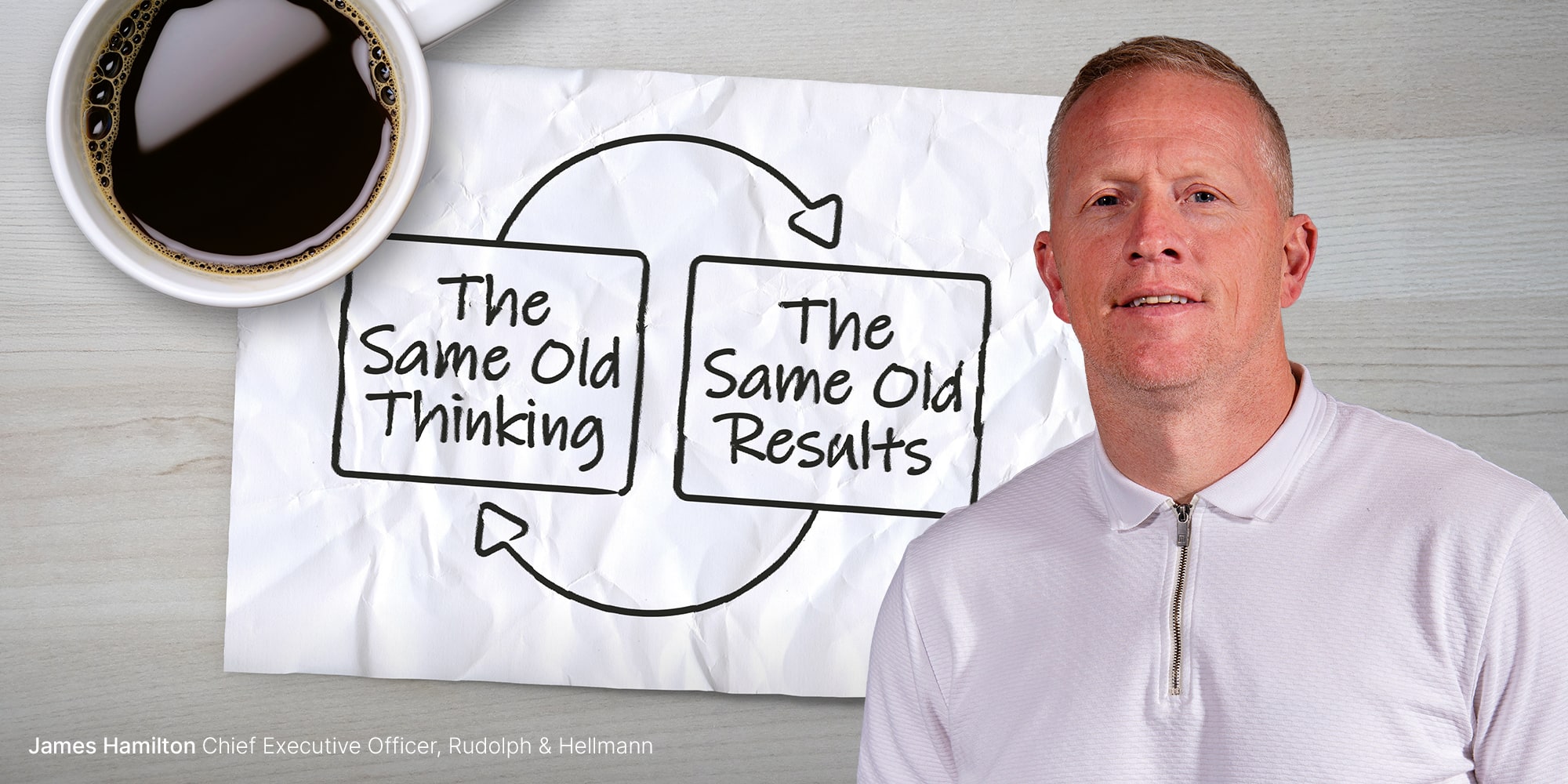
Without embracing this free thinking, we risk stagnation. “We’ve always done it this way” is a dangerous phrase in any operational context. Teams thrive when creativity is encouraged, when people are empowered to propose improvements, and when leaders value insight as much as measurement.
Grace Hopper, pioneering computer scientist, famously called “We’ve always done it this way” the most dangerous phrase in business, warning that unquestioned tradition stifles innovation and blocks better ways of working.
The Unmeasurables Are Just as Critical as KPIs
Great leadership requires recognising the unmeasurables—the factors that data cannot capture. It’s about blending hard metrics with intuition, experience and human insight. In logistics, as in football, the winning teams are those that combine the structure of analysis with the freedom to explore, test and innovate.
At Rudolph & Hellmann, we champion both: structured, data-driven excellence and a culture where curiosity, problem-solving and innovation are encouraged. Because if we only follow the numbers, we might achieve efficiency today—but the breakthroughs that define the future come from those willing to look beyond what can be measured.
Innovation is a team sport. And in both football and logistics, it’s the people who balance skill, instinct, and creativity who ultimately drive performance.