
Reflections from the VTCT Skills Logistics Conference – 19 March 2026
A Day Focused on Progress
On 19th March, industry leaders, policymakers and training providers gathered at GTG Wolverhampton for the VTCT Skills Logistics Conference—a focused and timely event dedicated to the future of skills, apprenticeships and workforce development within the logistics sector.
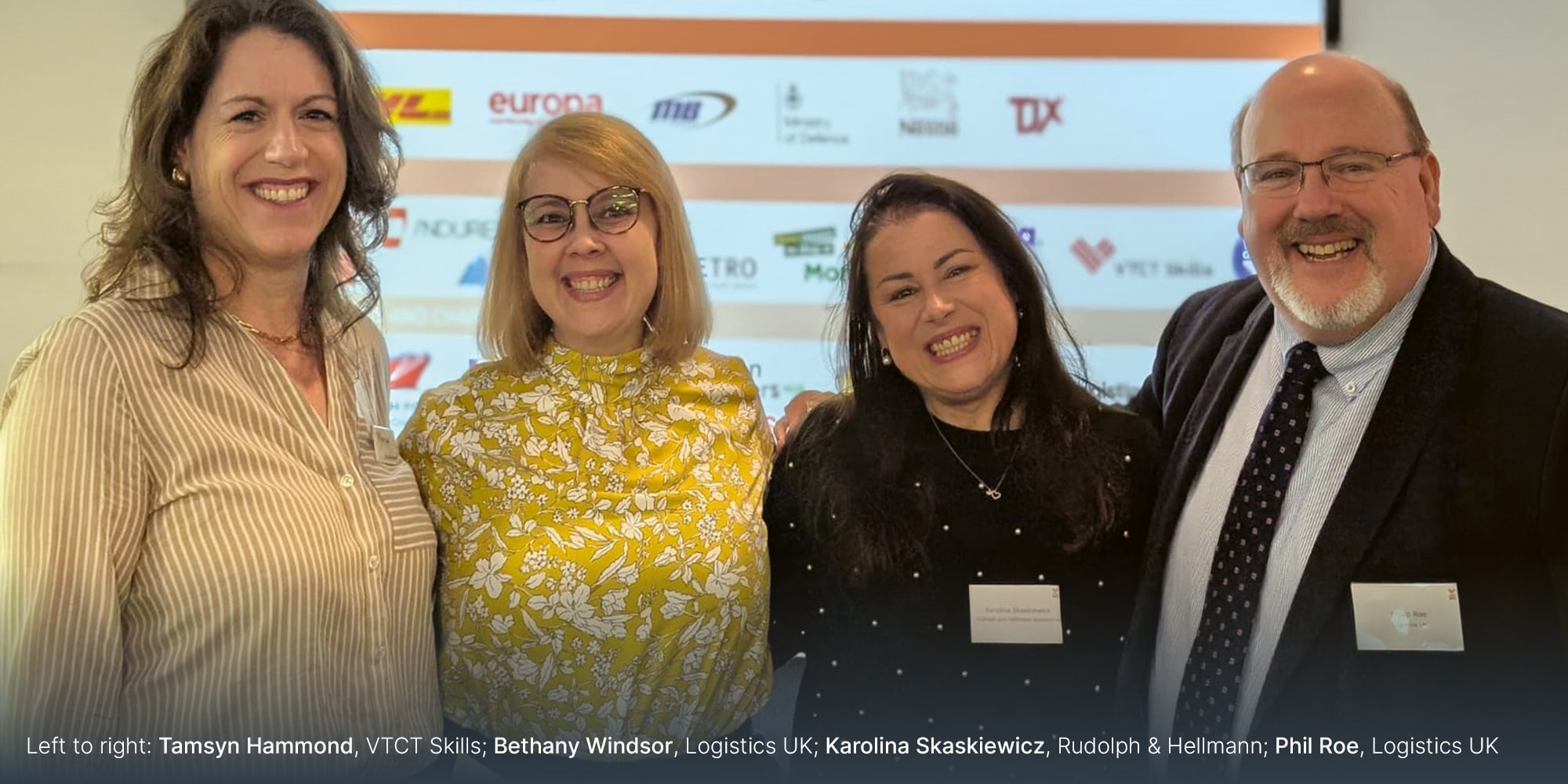
Representing Rudolph & Hellmann Logistics Solutions was Karolina Skaskiewicz, Business Management Executive, whose attendance reflects the organisation’s continued commitment to investing in people, raising standards, and shaping the future of operational logistics across multiple sectors.
The conference brought together a diverse range of voices to explore how the industry must evolve—covering everything from apprenticeship reform and instructor standards to employer–provider collaboration and the long-term impact of policy changes.
Insights from Industry Leaders
Chaired by Andy Salter, Trustee of VTCT Skills and former Managing Director of DVV Media, the day featured an impressive line-up of speakers representing the breadth of the sector.
From Phil Roe, President of Logistics UK, to Simon Ashworth of AELP, discussions explored the evolving policy landscape and its implications for apprenticeships and assessment frameworks. There was a strong emphasis on ensuring that reform delivers meaningful outcomes—not just for providers, but for employers and the workforce itself.
Sessions led by Samantha Leleu and Leighton Burman highlighted the importance of regional delivery and regulatory alignment, while Tony Higgins provided valuable insight into achieving excellence under the new Ofsted Education Inspection Framework.
A particularly important discussion centred on inclusion and diversity, with Keely Priestman addressing the role of women in logistics and the need to attract a broader, more representative talent pool into the industry.
Building the Workforce of Tomorrow
At its core, the conference reinforced a simple but powerful message: the future of logistics depends on the strength, adaptability and development of its people.
For Rudolph and Hellmann, this message strongly aligns with its own people-first philosophy. With a leadership team grounded in operational experience and a culture that prioritises continuous learning, the organisation recognises that investing in skills is not just a necessity—it is a strategic advantage.
The themes of the day—raising standards, improving training pathways, and strengthening partnerships between employers and providers—mirror the journey R&H has been on in recent years as it expands into new sectors including healthcare and aerospace.
Karolina’s Perspective
Reflecting on the event, Karolina Skaskiewicz highlighted both the value of the discussions and their wider importance for the sector:
“The VTCT Skills Logistics Conference brought together some of the most influential voices in our industry, and it was clear from every session that we are at a pivotal moment for logistics skills and apprenticeships. The conversations around reform, standards and collaboration are not just important—they are essential in shaping a more resilient and future-ready workforce.”
“At Rudolph and Hellmann, we see first-hand how critical skills development is to operational excellence. Events like this play an important role in shaping the future of our industry, and we are incredibly grateful for the expertise and insight shared by all the speakers. It gives us confidence that, together, we are building a stronger foundation for the next generation of logistics professionals.”
Looking Ahead
The conference served as both a reflection point and a call to action.
As the logistics sector continues to evolve—driven by technological change, economic pressures, and diversification into new industries—the need for a highly skilled, adaptable workforce has never been greater.
For Rudolph and Hellmann, participation in events like this is more than attendance—it is active engagement in shaping the future of the sector. By staying close to industry developments and contributing to the conversation, the organisation ensures it remains at the forefront of best practice in training, development and operational excellence. The message from Wolverhampton was clear: the future of logistics will be built not just on systems and processes, but on people—and the skills we invest in today.