
Insights from West Yorkshire’s HealthTech Cluster Event
I had the privilege of attending Driving the Future of Innovation – West Yorkshire’s HealthTech Cluster, a landmark event held at Elland Road Stadium in Leeds. Organised in partnership with the West Yorkshire HealthTech Cluster, the West Yorkshire Combined Authority, Innovate UK, and the West Yorkshire ICB’s HIVE Network, the conference was the first of its kind—designed to position the region as a global powerhouse for health innovation, research, and technology.
With more than 400 companies in attendance, ranging from digital health specialists to medical device innovators, the event served as an invaluable platform for suppliers seeking to understand how best to engage with the NHS and align solutions with its evolving priorities.
For Rudolph & Hellmann—an organisation increasingly supporting NHS Trusts with critical non-clinical logistics solutions—this event offered clarity on what the NHS truly needs from partners today, and what it will demand in the future.
Understanding the New NHS Landscape
What became clear throughout the conference is that the NHS is undergoing a major shift. Sessions focused heavily on:
- The 10-Year Health Plan
- Digitisation and future procurement models
- The move from hospital-centric care to community-based care
- Funding, research access, and innovation pathways
This evolution is driven by urgent system challenges: freeing up beds, reducing waiting lists, improving patient flow, lowering operational costs, and enabling prevention-led care. For logistics providers like Rudolph & Hellmann, these changes redefine where and how we can create value.
Key Takeaways: What the NHS Needs From Its Suppliers
Across panel discussions, keynote presentations and networking conversations, several themes stood out—many confirming what we already suspected, but with far greater clarity and emphasis when delivered directly by senior NHS leaders and procurement specialists.
1. The NHS is more risk-averse than even aerospace
One speaker who had worked in both NHS and aerospace industries noted that the NHS is even more risk-averse. The reason is simple: every decision can affect people’s lives. This means suppliers must be meticulous, transparent and rigorous in their evidence.
2. Evidence-based proposals are essential
The NHS will not move forward on claims alone. They expect:
- Proven data
- Demonstrable outcomes
- Clear baselines and measurable impact
For logistics, this reinforces the need to quantify efficiency gains, reductions in handling time, improved utilisation and reductions in waste.
3. Suppliers must support the priorities of the NHS 10-Year Plan
Any solution must align with core priorities such as:
- Integrated care
- Prevention
- Digitisation
- Operational efficiency
- Community-based care
R&H’s ability to optimise consolidation centres, streamline deliveries, reduce handling and improve non-clinical flow aligns closely with these themes.
4. Trust is a decisive factor
Before the NHS considers what you provide, they want to know:
- Can we trust you?
- Do you understand us?
- Will you stand by what you promise?
This resonated strongly. Our relationships with Trusts must be built on consistency, patience, and partnership—not transactions.
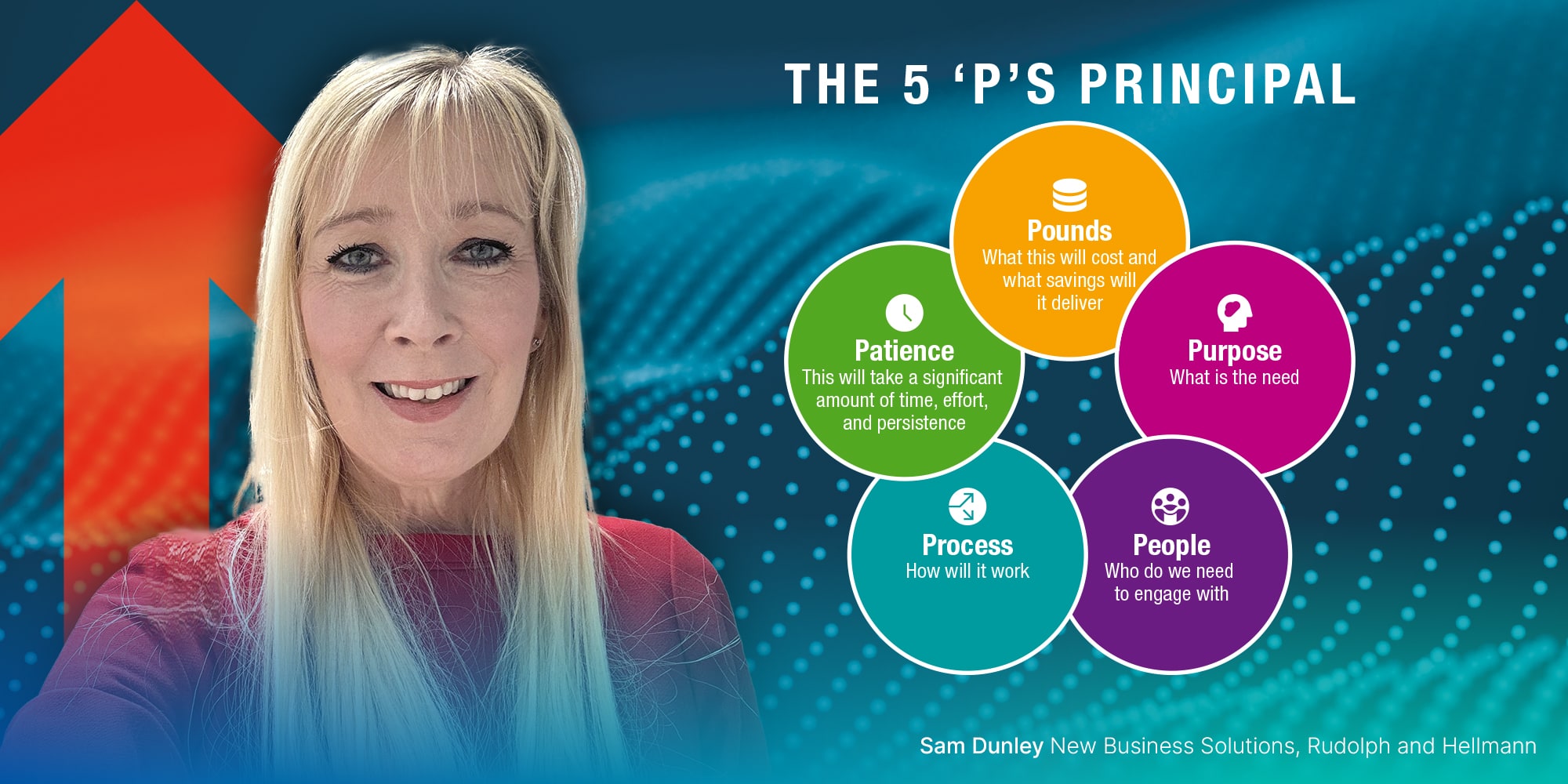
5. The 5 P’s: A model suppliers must embrace
Senior NHS leaders outlined the framework they use when assessing potential partners:
- Principal Pounds — cost vs. value; what improvements or savings are realistic?
- Purpose — does the solution address a genuine need?
- People — have we engaged the right decision-makers and end users?
- Process — how will it work in practice?
- Patience — change takes time, and suppliers must commit for the long haul.
This is a mindset our industry must embrace—and R&H is already beginning to.
6. The shift from hospital to community is accelerating
This is perhaps one of the most important insights. To achieve prevention-led care and reduce pressure on acute settings, more services will move into the community. This requires new logistical solutions—flexible, responsive, efficient and digitally integrated.
R&H’s strong track record in automotive and retail logistics puts us in a strong position to support this transition.
7. Become more digitally driven
The NHS expects suppliers to be innovative, future-facing and digitally capable. Manual or outdated processes will not support future models of care.
Our digital investments in workforce management, data visibility, and operational reporting are directly aligned with this expectation.
8. Don’t bring the status quo—bring solutions to real problems
One message was repeated many times:
“Solve the problems the NHS actually has, not the ones we imagine it has.”
This requires deep listening, working closely with users, and understanding the lived challenges of porters, clinical teams, procurement and estates.
How This Helps Rudolph & Hellmann Deliver More Value
Attending this event reinforced the importance of positioning ourselves not simply as a logistics provider, but as a solutions partner for the NHS—one capable of improving non-clinical workflows, freeing up clinical time, and supporting better patient outcomes.
It validated that our direction is right:
- Investing in digitisation
- Strengthening our understanding of NHS operations
- Building evidence-based value propositions
- Developing services that support efficiency and community-led care
- Prioritising long-term relationships over quick wins
We already see the impact of this approach through new partnerships—such as our recently awarded logistics contract with Leeds Teaching Hospitals, where we are supporting consolidation and operational efficiency across their Dolly Lane facility.
The event confirmed that the NHS needs exactly the kind of structured, intelligent, agile logistics solutions that R&H provides.
Final Reflections
Many of the insights from the conference validated what we have been learning as we engage deeper with NHS Trusts—but hearing it directly from senior NHS leaders made the message far more powerful.
It made clear that if we truly want to support the NHS, we must:
- Walk in their shoes
- Listen carefully
- Build trust
- Provide evidence
- Solve real problems
- Commit to long-term partnership
This event was more than informative—it was energising. It strengthened my belief that Rudolph & Hellmann can play an important role in helping the NHS operate more efficiently, more sustainably and more effectively in non-clinical areas where logistics underpins everything.
And it gave us the insight we need to continue evolving—and to do so with purpose.