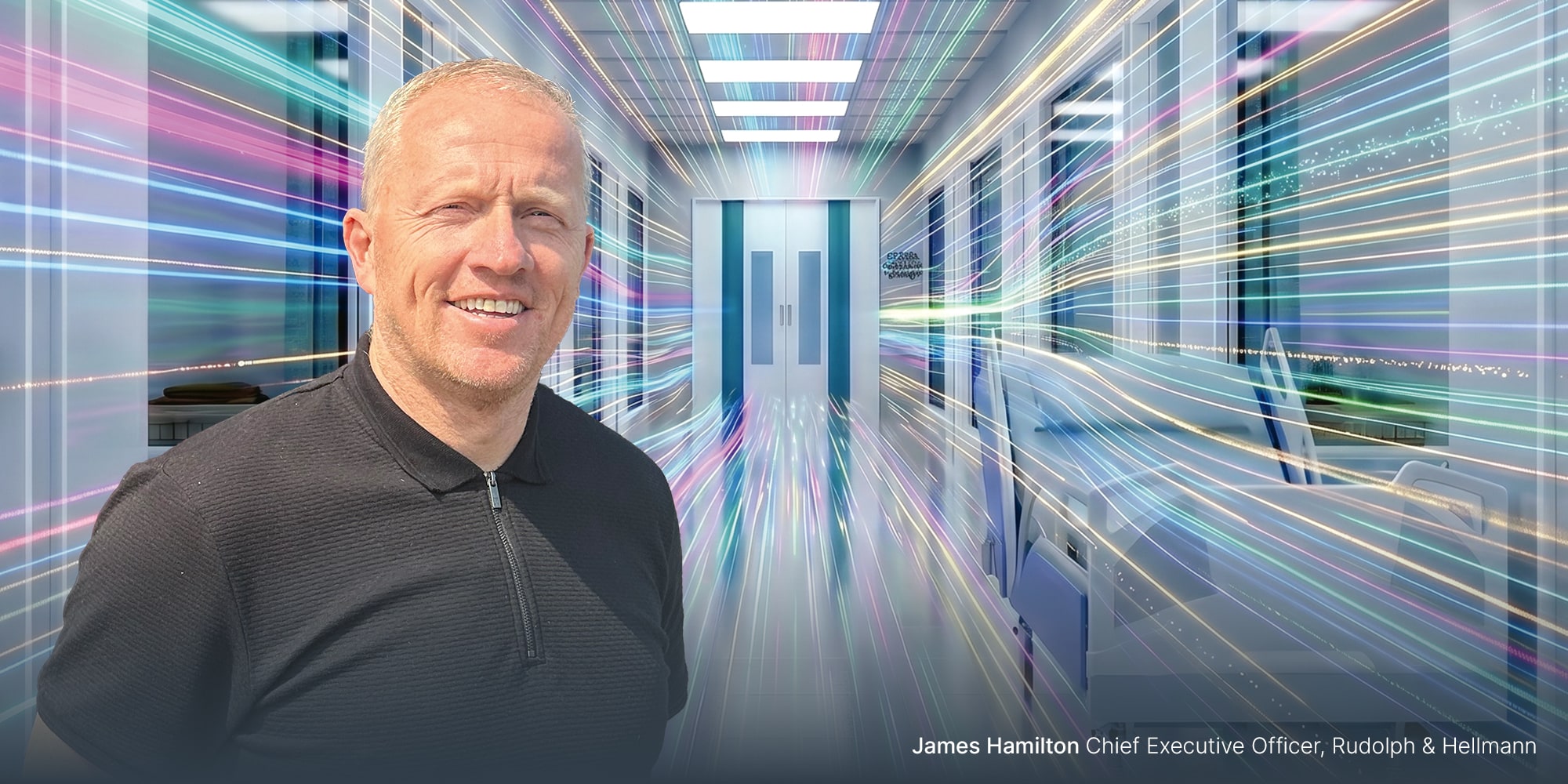


Why Rudolph & Hellmann believes operational logistics can unlock capacity for care
A System Under Pressure
The NHS faces what can only be described as a structural Catch-22.
On one hand, it must reduce costs and improve efficiency. On the other, it is being asked to deliver more care than ever before—against a backdrop of rising public expectations, increasingly complex treatments, and a growing, ageing population.
Procedures that were once considered specialist are now routine. Demand continues to rise. And the system must stretch further, without compromising the quality and safety of care.
The ambition set out in the NHS 10-Year Plan recognises this reality. It calls for transformation—smarter use of resources, better integration, and a shift toward more efficient, patient-centred delivery.
But ambition alone is not enough. The challenge lies in how that transformation is delivered—practically, sustainably, and within the constraints of day-to-day operations.
Learning Before Leading
At Rudolph & Hellmann, we recognised early that healthcare logistics could not be approached in the same way as other sectors.
Over the past two to three years, we have taken the time to listen and learn.
Through dozens of workshops with NHS Trust leaders across the UK, site visits to hospitals and healthcare facilities, and participation in sector conferences, we have built a deep understanding of the pressures facing the system—not just at a strategic level, but on the ground.
What has become clear is this: there is no single solution.
Every NHS Trust operates within its own unique context. Geography, population demographics, estate configuration, and service delivery models all shape how logistics must function in practice.
The challenges in a large urban teaching hospital are not the same as those in a rural, multi-site Trust. Infrastructure varies widely. So too do the demands placed upon it.
Which means any meaningful solution must begin with understanding—not assumption.
Operational Logistics That Protects Care Delivery
Our role is not to impose a standard logistics model.
It is to design solutions that work within the realities of each organisation—supporting care at the point of delivery.
Traditional logistics often focuses on supply and storage.
Our focus is different: operational integration.
That means ensuring that materials, equipment and assets are:
- Available when needed
- Visible across the system
- Ready for immediate use
So that clinical teams can focus entirely on patient care.
In practical terms, this can include:
- Improving visibility and control of high-value and consignment stock
- Managing loan equipment and community-based assets
- Optimising theatre kitting and instrument flows
- Designing multi-site and community distribution models
- Tracking assets to reduce loss and improve utilisation
- Enabling digital visibility to support operational and clinical decision-making
This is not logistics in isolation. It is logistics embedded within live healthcare environments—working alongside clinical and non-clinical teams, not around them.
A Different Approach to Change
The NHS does not lack awareness of its challenges.
What it often lacks is the time, resource, and specialist capability to address them while continuing to deliver frontline care.
That is where Rudolph & Hellmann can help.
Our approach is deliberately structured, but always flexible:
- Exploratory Workshop – listening first, understanding pressures and priorities
- Scoping Workshops – often on-site, observing real workflows and constraints
- Consolidated Scope – aligning on opportunities and quantifying potential benefits
- Business Case Development – building fully costed, practical delivery options
- Delivery or Tender Support – enabling compliant, low-risk implementation
At every stage, organisations remain in control. Our role is to support informed decision-making—not to add burden.
We also recognise that change in the NHS must be handled with care. It must be safe, compliant, and culturally aligned. Most importantly, it must not disrupt the very services it is trying to improve.
Unlocking Capacity for Care
At its heart, this is not about logistics.
It is about care.
When operational logistics functions effectively, it releases time, reduces friction, and creates capacity. It allows clinicians to spend less time searching, waiting, or managing equipment—and more time with patients.
In a system under pressure, those gains matter.
They are not abstract efficiencies. They are tangible improvements that support safer, more reliable, and more responsive care delivery.
A Trusted, Long-Term Partner
Rudolph & Hellmann bring a combination that is both rare and valuable.
Operational logistics expertise, developed in some of the most demanding industrial environments.
A deep respect for the complexity of healthcare delivery.
And the stability of two family-owned global organisations with a long-term perspective.
We are not driven by short-term gain.
We are focused on sustainable improvement.
The NHS 10-Year Plan sets out an ambitious vision for the future.
We believe that operational logistics—designed properly, implemented carefully, and tailored to each organisation—can play a meaningful role in delivering it.
Because when logistics works, care flows.
And when care flows, the entire system performs better—for patients, for staff, and for the future of healthcare in the UK.